30 Days of Love 2026
Week Two: Grounding in Context
Reflection
by Rev. Ranwa Hammamy, UUA Congregational Justice Organizer
Becoming parents was no small decision or task for myself and my spouse. We live at the intersections of some very real privileges and challenges. On the one hand, we are a queer couple, so the ways we could expand our family necessitated medical and legal proceedings that disproportionately impact families like ours. But we were also privileged enough to have access to insurance and providers in a state that made it affordable and safe to grow our family when the time was right. And it was not lost on us that we were at the height of our efforts to have a baby when the Dobbs decision came down in 2022, dealing a horrific blow to the reproductive justice movement that had made families like ours possible.
Yet, with all of the medical, legal, financial, and logistical aspects to our decision-making process, one factor weighed most heavily on my heart:
What kind of world would my child be inheriting? Would they hate me for bringing them into a world that was dying?
Both my spouse and I had several conversations about this truly difficult reality. Was it fair for us to bring someone into a world that was going to be that much harder and scarier for them just because we wanted a child? With global temperatures and fascism on the rise - would they even have a chance to live a full life? Even now asking those questions aloud, I still wonder…I suppose that’s the inevitable reality of parenthood.
But in the end, amidst those real fears and uncertainties, we knew there was space for hope. Because we believed, and still do, that just because the hardships are inevitable, that doesn’t mean the beauty and healing is impossible. Because we know what kind of world we are building our family within, we can surround Noor with the values, experiences, and communities that nurture their creativity, resilience, compassion, and commitment to the world they decide is possible. Witnessing youth and young adults lead the way with movements like the March for Our Lives, the Sunrise Movement, Black Youth Project 100, Palestinian Youth Movement, and countless more reminded us that if the ones inheriting the world are still fighting to change it, then we have no excuse to give up on it yet. That Noor would be inheriting not simply a dying world but an evolving one - shaped by the experiences, imaginations, wisdom, and collective care of communities centered on the values of interdependence, transformation, and love.
Creative Practice
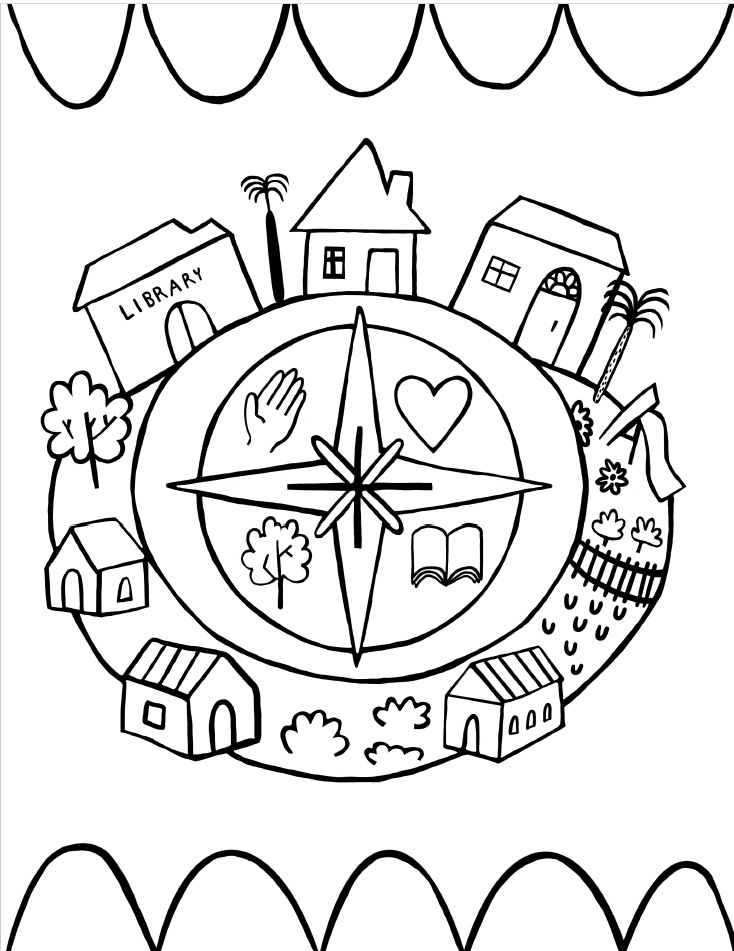
“Grounding in Context” Coloring Sheet by Lena Kassicieh
Theological Conversation
This conversation centers on grounding faith-based organizing in lived realities, accountability, and strategic clarity. Side With Love’s Rev. Brandan Robertson and Nicole Pressley discuss how movements remain responsive to local conditions while coordinating collective action at scale—especially amid political instability, democratic erosion, and overlapping crises.
Nicole Pressley serves as Organizing Strategy Director for Side With Love at the Unitarian Universalist Association. She began her work at the UUA in 2020 as National Organizer for UU the Vote, later serving as Side With Love’s Field and Programs Director. Over the past several years, she has helped strengthen organizing infrastructure, deepen partnerships, and coordinate national action on democracy, bodily autonomy, climate justice, and decriminalization.
With more than fifteen years of organizing experience, Nicole has played a central role in historic mobilizations such as UU the Vote during the COVID-19 pandemic, climate justice initiatives including the Green Sanctuary 2030 program, and UU Climate Justice Revival, and campaigns addressing detention and deportation and rising authoritarianism. Her work is grounded in a conviction that love is both a catalyst for action and the foundation of Beloved Community.
Body Practice
Inspired by "Our Roots of Resilience" by Kimberlee Anne Tomczak Carlson