"how do we continue to be an invitation to that which we're longing for?" - adrienne maree brown

We are so excited to bring you the next set of interviews of Fortification: Spiritual Sustenance for Movement Leadership. We see Fortification as a continued opportunity to hear from people within and across faith and spiritual traditions to talk about some of the questions facing organizers, communities and institutions in these times.

In December, we had an opportunity to have conversations with a number of members Auburn's Resilient Leaders Across a Fractured Country, amplifying the lessons of spiritually-resilient leaders in the South, Midwest, and Southwest.

In today's conversation Caitlin spoke with adrienne maree brown, writer, social justice facilitator, pleasure activist, healer and doula living in Detroit. Her book, emergent strategy, has been an extraordinary text and resource supporting folks doing justice work we highly recommend.
This week our theme is Growing Our Ecosystem. We are thinking about the vision we hold for our world. What is the ecosystem, forest, garden, wild space that we are trying to grow? Who is the crew with you on this journey?

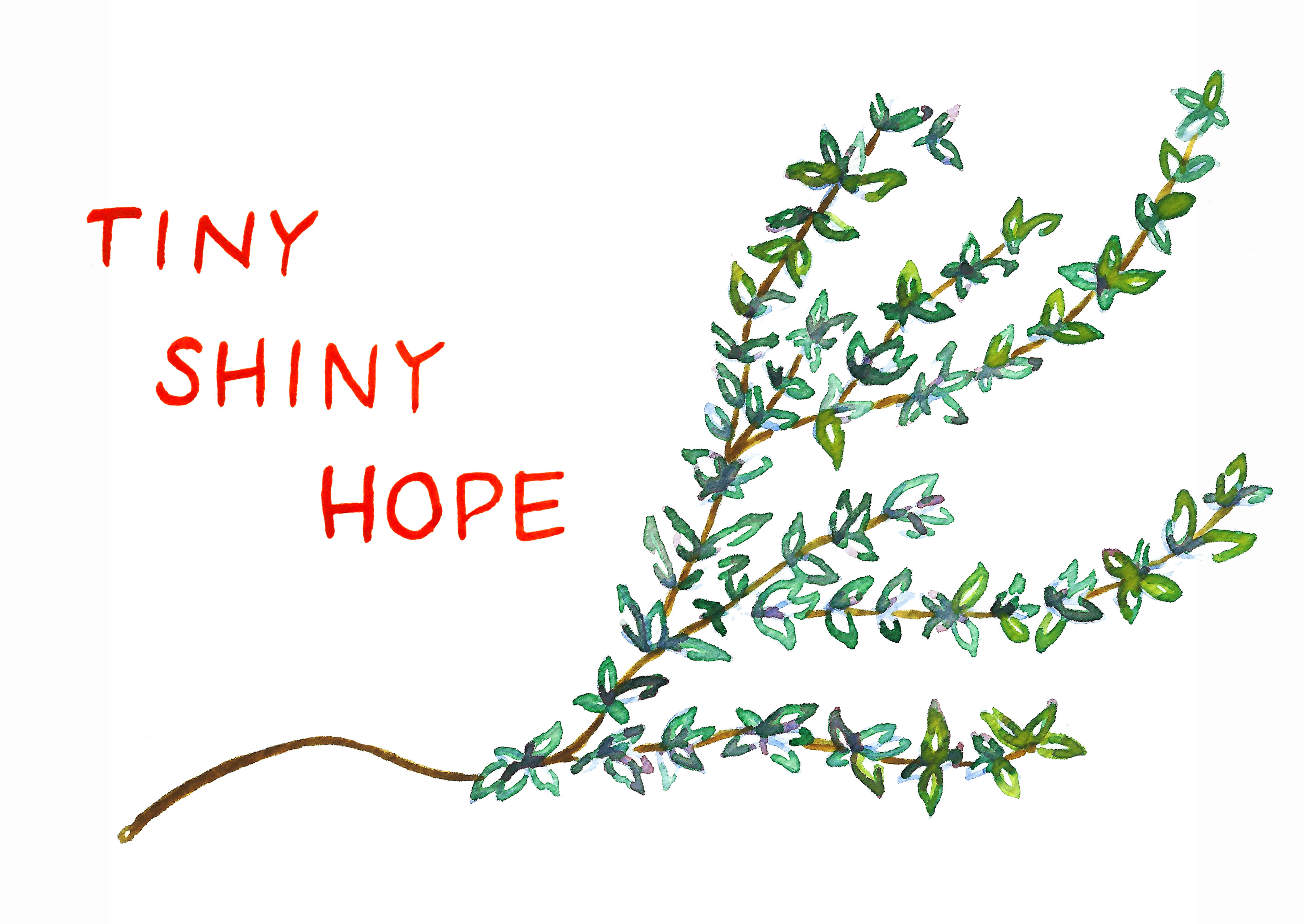
We honor our ancestor Lewis McGee, share Tiny Shiny Hope by Katie Blanchard, offer an invitation to try a practice and recommend you check out the Healing Justice podcast. Check out the Thirty Days of Love 2018 All-Ages Activities by Rev. Marisol Caballero. Next week we’ll be back with our second message on good soil, good seeds. Stay tuned!

Since its inception, Standing on the Side of Love (SSL) received feedback from disability rights activists within Unitarian Universalism about the exclusionary and ableist language of “standing”. 

Over the last nine years, the vision of our work has shifted and transformed from working on issues of dismantling white supremacy, LGBTQ equity, addressing anti-Muslim bigotry, immigration justice and more. We find ourselves now meeting the shifting political moment, providing behind the scenes support in moments of uprising, leveraging resources and offering spiritual sustenance. During this time, some UUs have already adapted our name to remove the word “standing.” We have seen people change t-shirts, banners, and the song that inspired the campaign’s name. Pushed forward by a Responsive Resolution at GA 2017, we committed to changing the name because of its history of injury and exclusion and to honor and respond to feedback by making the shift. Staff from the UUA, in collaboration with the authors of the Responsive Resolution, EqUUal Access and other stakeholders, worked on the name change proposal. 

We are so excited to share with you that our new name, our new imagining, as the Responsive Resolution so beautifully called for, is Side with Love! You can also watch a video about our announcement here. Check out EqUUal Access' take on the shift here.

Next week, we will celebrate Thirty Days of Love. We’ve been planning and preparing for our name change announcement - stay tuned here and online for a message from us tomorrow. The name change is an opportunity for us to practice the themes for 30 Days of Love 2018.

Right now we are turning to that which kept us going in 2017. We found deep meaning and inspiration in the work of Black Lives of UUEqUUal Access and disability rights activists within Unitarian Universalism, UU religious professionals of Color leading the White Supremacy Teach-Ins and beyond as their visionary leadership called us into building a new way forward. The wisdom, grace and faith that made any possibility of accountability continue. We continue to take in the the challenge and possibility of this political and denominational moment. 
 

As we enter 2018, we are looking back and casting visions forward. We are charting the work of Standing on the Side of Love in 2017 and scanning ahead for what is coming. We invite you to join in celebrating, reflecting, and making ready. We’ve gotten into graphs as a way to visualize our work and are inviting you into the fun! Check out those and some moments from our work from 2017 in our year-end-review here.

adrienne maree brown, in the book Emergent Strategy, which we have taken much wisdom and guidance from this year writes, “the role of organizers in an ecosystem is to be earthworms, processing and aerating soil, making fertile ground out of the nutrients of sunlight, water, and everything that dies, to nurture the next cycle of life. all that has come before is in the soil which now yields the movement to counter wall street and the systems of capitalism and create a new economy of relationships, a new society of care and respect. in that paradigm there is no failure. everything we attempt, everything we DO, is either growing up as its roots go deeper, or it’s decomposing, leaving its lessons in the soil for the next attempt.” 

Greetings dear ones:

We hope this finds you taking care and surrounded by warmth and community. Whether it is with others or in solitude, sending you some treats in this electronic holiday care package as we reflect on the year that has passed and prepare for our work ahead.

Grateful to bring you our next installment in our bi-weekly messages with a prayer, an ancestor and a song speaking to our spirits. We hope these resources may offer what we need in order to be courageously, steadily, humbly, on the side of love. One ancestor to lean on, one prayer for our messy lives, and one song to strengthen and soothe.

ANCESTOR

Margaret Moseley (1901-1997) was an African-American Unitarian civil rights activist from Dorchester, MA. Ms. Moseley wanted to pursue nursing and business but entrenched racial discrimination and white supremacy in both fields stopped her from doing either. Moseley would instead go on to be involved in a number of racial and economic justice organizing efforts throughout her life. She helped found the consumers’ cooperative in Boston, served on the Civil Liberties Union of Massachusetts and Freedom House in Roxbury. Ms. Moseley helped found chapters of the NAACP and WILPF in Cape Cod, Massachusetts. Moseley was also deeply involved in church governance and leadership including acting as the president of the Community Church in Boston and in number of roles at the Unitarian Church of Barnstable. Read more about Moseley’s leadership and life’s work here and here.

Grateful to bring you our next installment in our bi-weekly messages with a prayer, an ancestor and a song speaking to our spirits. We hope these resources may offer what we need in order to be courageously, steadily, humbly, on the side of love. One ancestor to lean on, one prayer for our messy lives, and one song to strengthen and soothe.

ANCESTOR

“Spirit of Truth and Love within our living hearts, we pledge our faithfulness to all who toil that we may eat our bread. We rejoice in human power to shape the stuff of earth into things of usefulness and beauty. May our hands and minds add their portion to the common treasure of a world more fair. We would find our place among the workers of humanity, proud of honest labor done, and rest deserved, and wages earned.” - To All Who Toil, Rev. Stephen Fritchman

Rev. Stephen Fritchman (1902-1981) was a Unitarian minister, author and youth worker. Initially trained as a Methodist minister, Fritchman became a Unitarian minister in 1930 and went on to work for the American Unitarian Association, including as youth director, as well as editor of the AUA journal, the Christian Register, what we now know to be UUWorld. Fritchman found both support and resistance within his role, was forced to testify before The House Committee on Un-American Activities (HUAC) and would eventually be forced to resign due to his support of Soviet policies and public affiliation with communist organizations including the Popular Front. Fritchman went on to become a minister in Los Angeles - where the justice work of his congregation would be monitored by the FBI for periods - and remain involved in immigrant and racial justice work, resistance to state-sponsored surveillance and a number of political parties. Read more about Rev. Fritchman here.

ANCESTOR

To me, a religious quest is a quest for the truth. Truth is one, but man's understanding of truth grows with the progress of mankind. I cannot believe that truth can be shut up in the narrow confines of any system of thought. . .” - Rev. Andrew Kuroda

Andrew Kuroda (December 29, 1906 - February 19, 1997) was a Unitarian minister, cataloguer, bibliographer and reference librarian. When President Franklin Delano Roosevelt issued his Executive Order 9066 in 1942, Kuroda and his family were forced into internment camps Newell, Calif., and in Colorado. Later, asked why Japanese American citizens did not resist this order, Kuroda explained that "We were concerned about our safety—the threat of reprisals against us was always on our minds." His final military assignment was as a member of the United States Strategic Bombing Survey, working in Washington and Japan, which surveyed the morale of the Japanese whose lives had been affected by the dropping of the two atomic bombs. He would eventually go on to become a librarian working in the Library of Congress. At the same time, Kuroda served in a number of Christian churches until he became Unitarian and soon after established the Japanese Unitarian Fellowship of All Souls’ Church (Unitarian) conducting its first service in Japanese in 1962 - the only Japanese Unitarian fellowship outside of Japan. Read more about Rev. Kuroda here.